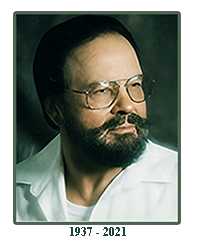
A Tribute to Dr. Cherepanov's Scientific Legacy
Genady P. Cherepanov, Honorary
Life Member of the New York Academy of Sciences (elected
1976), was a distinguished mechanician whose primary contribution
to science lies in the development and application of invariant
(path-independent) integrals to problems of fracture mechanics,
elasticity, fluid dynamics, and — late in his career — cosmology.
His 2019 monograph, Invariant Integrals
in Physics, represents the culmination of six decades
of work. In it, he demonstrates that the law of energy conservation,
expressed through invariant integrals, can serve as a unifying
principle from which many classical and modern physical
laws can be derived, corrected, or extended. He is best
understood not as a revolutionary who overturned fundamental
physics, but as a brilliant applied mathematician and mechanician
who fearlessly challenged foundations — questioning established
theories, confronting scientific orthodoxy, and correcting
long-standing problems where correction was due.
Among his most significant achievements is the first complete mathematical theory of hydraulic fracturing (fracking), which allows engineers to predict the shape of fractured rock volume and gas output from first principles. This work has profound implications for the multi-billion-dollar oil and gas industry. He also solved the two-hundred-year-old problem of rolling friction, deriving analytical expressions for the rolling resistance coefficient for cylinders, balls, and tori on elastic foundations. Railroad and automotive engineers can now calculate rolling resistance rather than rely on empirical tables.
In contact mechanics, Cherepanov solved the Hertz-Muskhelishvili stick-slip problem, introducing a dimensionless brittleness number that separates brittle fracture from plastic flow. His work explains why stuck objects suddenly slip — a phenomenon relevant to brakes, tires, earthquake faults, and machining. He also modeled the catastrophic growth of pressurized cylindrical cracks, known as gryphon cracks, which caused the 2010 Gulf of Mexico oil spill and nuclear reactor failures at Chernobyl and Fukushima. These contributions provide quantitative tools for industrial disaster prevention.
He founded the field of nanofracture mechanics — originally named "Quantum Fracture Mechanics" (1990) and later renamed "Nanofracture Mechanics" (a name suggested by John Gilman). He developed the first complete, unified, discrete atomic theory of dislocation generation, crack growth, and cleavage decohesion, built from first principles using atomic force balances and dislocation theory. He introduced the brittleness number to determine whether a crystal behaves ductile or brittle. Unlike all prior models, his theory can handle the emission and stable settlement of multiple dislocations — a crucial capability for describing real material behavior. This work, supported by an NSF grant, bridged atomistic and continuum descriptions of fracture for the first time in a unified manner and established an entirely new branch of mechanics.
Cherepanov re-derived several classical laws — Archimedes' buoyancy principle, Newton's laws of motion, Coulomb's law of electric charges, and Einstein's E=mc² — from his invariant integral, demonstrating the unity of conservation principles. He also derived the shape of an optimal airfoil that maximizes flight speed before shock waves form, a design not yet widely adopted but mathematically complete. He developed the theory of fluidization of particulate media (with Gupalo and Galin), providing the first rigorous mathematical foundation for fluidized bed reactors used throughout the chemical and petroleum industries. He generalized Galileo's equistrength principle for arbitrary structures, predicting many equistrong configurations including turbine blades, rotating disks, and underground tunnels.
In explosion physics, he developed the theory of explosion effects in brittle materials — the counterpart to the Taylor–Grigorian theory for plastic materials — applying fracture mechanics to blast-induced cracking in rock, concrete, and glass. He applied catastrophe theory to fracture mechanics, proving that failure criteria for brittle materials are path-dependent and do not meet Drucker's postulate, establishing that brittle failure is inherently a catastrophic phenomenon. His 1997 monograph, Methods of Fracture Mechanics: Solid Matter Physics, integrated complex analysis, Mellin transforms, the Wiener-Hopf method, invariant integrals, catastrophe theory, and fractal geometry into a unified treatment of fracture phenomena, establishing nanofracture mechanics and fractal fracture mechanics as distinct subfields.
Beyond his scientific achievements, Cherepanov was a man of profound moral courage. During the glasnost era in the late Soviet Union, he published samizdat works — underground, self-published texts circulated at great personal risk. He wrote openly against military expansion, KGB repression, and autocracy. He addressed an open letter to President Gorbachev, engaged with the legacy of Solzhenitsyn, and developed mathematical models of social justice and labor migration. These works reveal a man of science who would not be bounded by the laboratory — who brought the same rigorous approach to questions of human dignity as to fracture mechanics, and who put his own safety at risk to stand against authority.
In cosmology, Cherepanov developed the NEOC (Neoclassic Cosmology) model, rejecting general relativity in favor of a flat, Euclidean universe in which dark energy emerges naturally as a repulsive term proportional to distance, which he later interpreted as the centrifugal force of a slowly rotating universe. His galactic rotation formula correctly predicted the Milky Way's total mass, a result recently confirmed by Gaia DR3 data.
Cherepanov's corrected laws merit thoughtful consideration. Archimedes' principle with surface tension, the generalized Coulomb law for relativistic charges (CBC law), and the analytical rolling friction law belong in university physics and engineering handbooks. His re-derivations of Newton's laws and Einstein's equation as particular solutions are remarkably elegant and serve as a brilliant example of a creative approach to fundamental problems in physics. His foundational work in nanofracture mechanics, fluidization theory, and equistrong design deserves inclusion in materials science, chemical engineering, and structural optimization textbooks.
"He brought the rigor of fracture mechanics to everything — from a rolling wheel to the expanding universe, from atomic dislocations to exploding stars."
Across his long career, Dr. Cherepanov contributed to at least 17 major scientific fields and roughly 91 distinct subfields — from pure mathematics and fracture mechanics to geophysics, cosmology, political science, and mathematical sociology. By any measure, he deserved multiple major international awards: the Nobel Prize in Physics, the Timoshenko Medal, the Tribology Gold Medal, the Anthony F. Lucas Gold Medal. Yet history was not generous. Cold War-era publication isolation, bitter priority disputes (the J-integral, also denoted Г-integral in Cherepanov's original work, and the HRR singularity), his own aversion to self-promotion, and his later unconventional positions (NEOC cosmology, WTC collapse analysis) kept him on the margins of official recognition. He received the Lenin Komsomol Prize in 1972 and the Fulbright Prize in 2000 — but these honors, however genuine, remain a pale shadow of what his work truly merited.
Genady P. Cherepanov will be remembered as a creative and fearless scientist — one who made the corrections that physics needed, founded new fields, solved century-old problems, challenged dogma, and risked his freedom to speak truth to power.
|