Early Life and Childhood
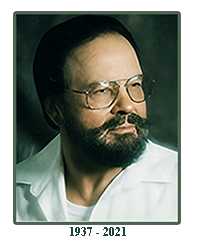
Genady Petrovich Cherepanov was born on January 8, 1937, in the village of Krutaya, Lyakhovsky District, Vladimir Region, into a peasant family — in the very same house where, seventeen years earlier, his mother, Alexandra Petrovna Cherepanova (1919-1991), had been born. His father, Pyotr Vasilyevich Cherepanov (1915–1942), was a captain in the Red Army and, in civilian life, a collective farm accountant. He was killed in action on November 29, 1942, near Velikiye Luki — known as the 'Little Stalingrad of the North' on the Eastern Front — while leading his battalion in an attack against a well-fortified German machine gunner who was guarding a strategic height.
The war years were marked by extreme hardship. In the late summer of 1942, young Genady and his mother rented a corner inside a typical single-room Russian log house. His mother worked long hours at a local collective farm, earning bread and a few potatoes. The bread ration was only 200 grams per person per day. To survive, Genady and some of his friends raided bird nests for eggs, gathered wild onions in the meadows by the Oka River, chewed on wheat and rye straw, collected mushrooms and berries, and fished with rods and nets. This was the harsh reality of rural life during wartime.
From the age of seven, Genady took on adult responsibilities. He carried an axe, gathered firewood from the forest, chopped it, and carried it home on his back or on sleds in winter. He also fetched water from the well. No one asked or forced him — he understood that if he did not complete these tasks, there would be no heat or water. These experiences forged in him a spirit of independence and self-reliance that would define his entire life.
Education and Early Academic Career
After graduation from high school in the small rural town of Melenki in May 1954, Genady took his father's officer's bag, in which only a towel, socks, a notebook, his medal, and school documents fit, as well as a loaf of bread and a few boiled eggs, and left his mother's house, which had been built by her brother four years earlier. His mother had spent all her savings on lumber for house construction. Genady headed to the railway station, jumped on a moving train, and arrived in Moscow without a ticket. He knew that living in Moscow on 10 rubles a month, which represented a third of his family's entire monthly income, would be next to impossible. He could not afford a train ticket, so he jumped onto a moving train and arrived in Moscow without one — saving every ruble for the uncertain months ahead. His mother, who had always dreamed of a more stable and honorable path for her son, had hoped he would become a priest. But Genady, though uncertain of his own direction, felt an ever-growing pull toward mathematics.
While in Moscow, he visited the admissions office of the Physics and Technology faculty at Moscow State University on Mokhovaya Street. Medalists were accepted without exams, but the scholarship was small, only 29 rubles, making it difficult to survive on. As Genady walked through the courtyard, he noticed a poster for the Moscow Institute of Physics and Technology (MIPT). The scholarship there was 45–75 rubles, but medalists were required to take exams like everyone else. Genady spent the night sleeping on a bench in a park, and the next morning submitted his documents to MIPT. Despite being hungry and covered in sores from a month of living on 29 rubles, Genady made it to the top ten on the exams. Out of his group of 649, eleven were medalists, but only 200 out of approximately 10,000 applicants were accepted. Five of his group went on to become PhDs, while the rest became MSs.
At the MIPT dormitory, Genady encountered white bedding sheets for the first time and saw his first movie. His new comrades laughed at his lack of knowledge about things that were considered common knowledge — they found it hard to believe that he did not know such simple things. Notably, he was not a member of the Komsomol (the Soviet youth organization), the first such case in MIPT's history, and he had no intention of joining. His mother had always believed that members of the Communist Party and affiliated organizations were dishonest people, and from childhood she had instilled in him the importance of staying away from them — though he would later come to realize that even among Party members, good people could sometimes be found.
MIPT was then an elite institution, but Genady rarely attended lectures. He found them burdensome — he often did not understand the material as readily as others, and his questions sometimes seemed unusual to his peers and professors. Without comprehension, he could not simply take notes, so he stopped attending lectures from his first year and prepared for exams independently using textbooks. Fortunately, MIPT was the only college in the country at that time that allowed students to skip lectures. The lecturers, however, were not pleased and were especially "attentive" to him during exams. Despite this, he failed only one exam — Ovsyannikov's course on the theory of functions of a complex variable — which he retook and passed with an excellent mark. That subject would later become his great advantage, helping him solve many fundamental problems. He considered Professor Ovsyannikov his "godfather" in mathematics.
Scientific Breakthroughs and Academic Achievements
After graduating from MIPT in 1960, Cherepanov's life became a combination of outstanding scientific achievements and struggles for survival in the complex game of science and politics. In 1962, he defended his Candidate of Sciences dissertation at Moscow State University, and in 1964, at the age of 27, he defended his Doctor of Sciences dissertation at the Institute of Mechanics of the Academy of Sciences of the USSR — making him the youngest Doctor of Sciences in Mathematics and Physics in the USSR at that time. Both dissertations were devoted to exact analytical solutions of mechanics problems with unknown boundaries, particularly non-one-dimensional elastoplastic problems. His dissertation opponents were L.A. Galin, F.D. Gakhov, D.I. Sherman, and R.V. Zvolinsky.
From 1963 to 1969, he worked as a Senior Research Fellow at the Institute of Mechanics and later at the Institute of Problems of Mechanics of the Academy of Sciences of the USSR. He then served as Professor of Mathematics at the Moscow Mining Institute (1969–1978), Senior Research Fellow at the Moscow Research Institute of Drilling Technology (1978–1987), and Head of the Laboratory of Mathematical Modeling at the Institute of Oceanology of the Academy of Sciences of the USSR in Vladivostok (1987–1990).
For five years, from 1967 to 1972, at the initiative of Yu.N. Rabotnov, he lectured on fracture mechanics at the Department of Elasticity Theory at Moscow State University — the first course on this new discipline in the Soviet Union. Regular attendees included V.Z. Parton, E.M. Morozov, V.D. Kuliev, and other future Doctors of Sciences and professors who would become renowned scientists.
In 1967, Cherepanov derived the invariant (path-independent) integral for fracture mechanics, dynamics, and statics of continuous media, specifically for solid elastic-plastic materials. In 1968, Rice proved its invariance for the statics of nonlinearly elastic materials. The corresponding integrals of Eshelby and Rice are special cases of the Cherepanov integral. Using his integral, he also found a self-similarity index at the crack tip. Later, these results became known as the HRR approach (Hutchinson-Rice-Rosengren method), as they published their solutions a year later, confirming all his results but without referencing his article — a priority dispute that would follow him throughout his career.
In the autumn of 1966, he began working on a book on fracture mechanics, which he completed in 1969. In the autumn of that year, he brought the finished manuscript to Academician L.I. Sedov at the Mechanics Institute of Moscow State University, announcing its completion. However, Sedov, who oversaw mechanics at the Nauka publishing house, decided to "dilute Cherepanov" (in his own words) and suggested that Parton and Kachanov write on the same subject. When they submitted their books, he published them simultaneously with Cherepanov's book. The book, Mechanics of Brittle Fracture, was finally published in 1974. In 1979, McGraw Hill published its English translation in the United States, establishing Cherepanov's status as a leading author in solid mechanics
The Moscow Discussion and Scientific Politics
In January 1967, Cherepanov wrote a critical note stating that the theory of crack propagation in brittle materials, which G.I. Barenblatt claimed to have created, had already been developed by Griffith and Irwin. Furthermore, the "Barenblatt module" was nothing more than the fracture toughness introduced by Irwin earlier. The note accused Barenblatt of intentional plagiarism, as he was well aware of the works of Griffith and Irwin. This note sparked the "Moscow Discussion" — a public confrontation that would have lasting consequences for Soviet science.
Another factor that provoked Barenblatt and his supporters was Cherepanov's major article published in May 1967, in which he proposed a universal theory of fracture applicable to any material — not just fragile materials like the Griffith-Irwin theory and Barenblatt's hypothesis. Barenblatt and his supporters needed to divert the scientific community's attention away from this seminal work in order to promote Barenblatt's election to the Academy of Sciences. Cherepanov found himself at the very center of a political battle for scientific power.
Reflecting on this period, Cherepanov wrote: "Personally, I do not regret participating in the Moscow Discussion, even though it caused me the most pain. A potential bureaucrat was prevented from being born, and an artist was given the opportunity to flourish. Millions of students around the world now study my ideas and methods. If I had withdrawn my critical note and refused to publish the article with the derivation of the invariant integral, as Barenblatt and Ishlinsky demanded, there would not have been a Moscow Discussion. In this case, the compliant Cherepanov would likely have been quickly elected to the Academy of Sciences and Barenblatt would have likely become its president, as planned by the powerful group of Zeldovich. The Academy of Sciences would have been even quieter and less noteworthy than it is today. I am guilty of disrupting this rosy future. Real history is written with tears and blood."
Struggles with the Soviet System
From 1974 to 1988, Cherepanov made several attempts to win election to the Soviet Academy of Sciences. His powerful and well-connected opponents used various means — including, according to his memoirs, KGB resources — to prevent his successful election.
Around 1975, a vehicle with diplomatic license plates attempted to crash directly into the small Fiat carrying Cherepanov and his wife Elena Odintsova — an actress from the prestigious Moscow Academic Art Theatre and a Soviet movie star at the time. Miraculously, they sustained only minor injuries because a random cab driver suddenly cut into their lane behind their car just before the assassin's vehicle approached at high speed. The cab was hit very hard but shielded Cherepanov's vehicle from a deadly impact. The taxi driver was found dead when the ambulance arrived. An investigation was launched but never found the perpetrator, and the murder case was abruptly closed.
In the spring of 1978, Dr. Cherepanov's struggle for human rights reached its culmination. Cherepanov wrote an open letter to Brezhnev demanding personal freedom to travel abroad and criticizing the authoritarian regime.
In 1981, Genady Cherepanov was arrested by the KGB in Latvia during a scientific conference and brought for interrogation to Moscow, inside the notorious Lubyanka headquarters. The KGB officers accused him of the murder of famous spacecraft designer and his friend Igor Berezjnoy, whose car had recently been blown up by a plastic bomb near the Institute of Mining Technology. The officers insisted that Cherepanov was an American spy assigned by the CIA to bring down Soviet science. Fortunately, Yuri Andropov, who was the chief of the KGB at the time, recognized that the accusations were fabricated from rumors and secret reports emanating from KGB informants and those who held a grudge against Cherepanov.
Reflecting on those days, Cherepanov wrote: "In those days, a passion for honest science could have ended tragically. Academics were afraid of Barenblatt, who had friends in high places, both in the Central Committee and in the KGB. He was able to travel abroad freely at a time when no one else was allowed to leave. Ishlinsky and Barenblatt were representatives of a new generation of scientist-politicians, for whom the ends justified the means. They were highly educated and well-informed in scientific matters, and they used their outstanding political abilities to gain power and defeat dissenters, even to the point of eliminating them physically."
International Recognition and Move to the United States
In 1976, Genady Cherepanov became the only scientist from the entire Soviet Union elected as an Honorary Life Member of the New York Academy of Sciences — one of the most prestigious academies in the world, which at that time had only about 100 members, almost all of whom were Nobel Prize winners.
In the late 1980s, Cherepanov wrote a paper entitled "The Mathematical Model of Totalitarian Autocratic Societies," in which he predicted the fall of the Soviet Union. He also had contact with world-renowned human rights activist Andrei Sakharov and participated in the Christian Democratic movement in Russia. Alexander Ogorodnikov, the head of the Christian Democratic Party, was once a guest in his home. Despite the freedoms promised by Gorbachev's perestroika, the pressure from the KGB apparatus continued, and he had no choice but to leave his homeland permanently.
In 1990, Cherepanov arrived in the United States and began working at Harvard University, where he had been invited as a Distinguished Research Associate in Solid Mechanics (1990–1991). He was invited by the famous American scientist Jim Rice. They had met twice in Moscow before and had corresponded. Rice had been studying the Russian language in order to read Cherepanov's original articles, which were published in Russian journals in the 1960s — journals that were delivered by airmail to Harvard's library just days after publication.
Cherepanov's poverty upon arrival was immediately apparent from his worn suit and worn-out shoes. He did not even have enough money for a ticket to Boston; the university purchased the ticket for him. Rice met him at the airport and took him to an apartment in Arlington belonging to an elderly retired secretary named Dot, who rented rooms to Harvard students and guests.
At Harvard, Cherepanov crossed paths once again with Barenblatt, who had flown immediately from Moscow to Boston upon learning of Cherepanov's presence. According to Cherepanov's account, Barenblatt persistently called Budiansky, trying to secure an invitation to Harvard. As Budiansky described it, Barenblatt was "like a jealous child," calling every night and talking for hours.
Later Career and Final Years
In the fall of 1991, Cherepanov accepted an offer from Florida International University and moved to Miami with his new wife Larisa and two children. He held the position of Professor of Mechanical Engineering at FIU from 1991 to 1998, where he lectured on advanced engineering and applied mathematics for PhD students. He sometimes asked willing students to conduct the lectures themselves — some of those who volunteered later became PhDs or professors themselves.
In the summers of 1997 and 1998, he worked as a Distinguished Summer Faculty Fellow at the Naval Research Laboratory in Washington, D.C., and at the Naval Air Warfare Center in New Jersey.
Cherepanov's children recall how their father would take them to the ocean, jumping in and swimming toward the horizon regardless of weather conditions or shark warnings, often returning after an agonizingly long hour. He would take them to the fitness center and lift weights like a young man, encouraging his children and impressing gym visitors.
Besides his love for sports, Genady Cherepanov was an accomplished chess player. One day in 1990, after his work at Harvard, he played a chess master in Harvard Square, across from Au Bon Pain — a famous gathering place for chess players at the time. Cherepanov won the game, and the master, furious, slammed the chessboard against the table. He also played a chess master on a New Jersey beach in the summer of 1998, after rescuing the young man from drowning. Though Cherepanov did not win that game, he offered strong resistance, keeping the master on edge.
It is worth mentioning that Genady Cherepanov saved lives on two occasions:
First rescue (summer of 1969):
While picnicking by the Kura River in Azerbaijan with a group of friends, Cherepanov rescued his Kurdish friend Nabi from drowning. Nabi had been playing in the river with children when the strong current swept him away. One of the children yelled, "Help!" Everyone froze in fear except Genady Cherepanov, who immediately jumped into the water and dragged Nabi to safety. It turned out that Nabi could not swim and had only wanted to cool off. At the time, Nabi served as an Assistant Attorney General in Kirovobad City (now Ganja), Republic of Azerbaijan.
Second rescue (summer of 1998):
While working at the Naval Air Warfare Center in New Jersey, Genady Cherepanov was relaxing on the beach when he met an elderly man and his son — Jewish immigrants from the Soviet Union who spoke Russian. The son was an accomplished chess master who had recently received a significant award. After their introduction, the young man went into the water and nearly drowned in an incoming wave. Cherepanov pulled him onto the sand and cleared the water from his lungs. After regaining consciousness, the grateful young man accepted Cherepanov's offer to play several games of chess.
Genady Cherepanov also wrote poetry in both English and Russian — his creative mind never rested. His last scientific work, "Projectile Impact onto a Membrane," was published in Prikladnaya Mekhanika i Tekhnicheskaya Fizika, Vol. 62, Issue 5, 2021. This work has potential applications in the design of ballistic armor and spacecraft shielding.
Legacy and Passing
Genady Petrovich Cherepanov passed away at the age of 84 on September 1, 2021, in Miami, Florida.
Throughout his long career, Cherepanov contributed to at least 17 major scientific fields and 91 distinct subfields — from pure mathematics and fracture mechanics to geophysics, cosmology, political science, and mathematical sociology. He founded the field of nanofracture mechanics, solved the 200-year-old problem of rolling friction, developed the complete theory of hydraulic fracturing, resolved the Hertz-Muskhelishvili stick-slip problem, and introduced the invariant integral that would become foundational to modern fracture analysis.
He was a scientist who would not allow the exact sciences to become the boundary of his thought — and who applied the same rigorous approach to questions of human dignity as he did to fracture mechanics. He put his freedom at stake to speak truth to power, and he never stopped seeking answers to the most fundamental questions.
Note on Scientific Priority Disputes
This biography acknowledges, with appropriate neutrality, that certain priority disputes exist regarding the invariant integral (J-integral, also denoted Г-integral in Cherepanov's original work) and the HRR singularity. These are matters of historical record and are presented without judgment, in accordance with the website's purpose of preserving a good memory of a great scientist and freedom-loving human being.
Sources
This biography is compiled from Genady Cherepanov's own memoir records, his published works, and historical records of his academic career and personal life.
|