1. Introduction to the NEOC Model
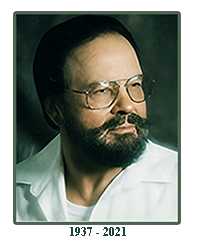
Dr. Genady P. Cherepanov developed the NEOC (Neoclassic Cosmology) model as an alternative to the standard ΛCDM cosmology. Instead of relying on Einstein's general relativity and curved spacetime, the NEOC model is built on a single foundation: the invariant integral — a path-independent energy conservation law.
The model is rooted in the belief that: "The universe is flat, homogeneous, and isotropic at large scales, and can be described using classical mechanics and a modified Newtonian force law that includes a repulsive term."
The NEOC model was first presented in his 2015 paper The invariant integral: some news and later expanded in Chapter 11 of his 2019 monograph Invariant Integrals in Physics.
2. The Invariant Integral of Cosmology
The cornerstone of the NEOC model is the invariant integral of the cosmic-gravitational field:
Γk = ∮Σ [ (8πG)−1 (φ,i φ,i nk − 2 φ,i ni φ,k) + Λ φ nk ] dΣ
| Term |
Physical Meaning |
| First term |
Flux of gravitational energy |
| Second term |
Work of field tractions |
| Third term (with Λ) |
Flux of cosmic energy (dark energy) |
From this integral, Cherepanov derives all his cosmological results — without using partial differential equations, without invoking curved spacetime, and without relying on the general theory of relativity.
3. The Modified Force Law
The invariant integral yields a modified Newtonian force law for two point masses:
F = −G m1m2 / R² + (4π/3) m2 G Λ R
| Term |
Meaning |
| First term |
Newtonian gravitational attraction |
| Second term |
Cosmic repulsion proportional to distance R |
Key features:
• The repulsive term does not follow Newton's third law (action ≠ reaction).
• It is proportional to R, so at large distances it dominates over gravity.
• Λ is the cosmological constant, interpreted as the density of dark energy — a uniform negative mass distribution.
4. The Dimensionless Number Ch
Cherepanov defines a dimensionless number that characterizes the balance between attraction and repulsion:
Ch = Λ L³ / M
| System |
Ch |
Implication |
| Solar System |
~10⁻¹⁷ |
Cosmic field undetectable |
| Milky Way |
~10⁻⁵ |
Cosmic field negligible |
| Supercluster |
~1 |
Gravity and repulsion balanced |
| Universe |
~3 |
Repulsion dominates → accelerated expansion |
Conclusion: The cosmic field is only observable at the scale of superclusters and the universe itself — exactly where astrophysicists observe accelerated expansion.
5. The Radius and Age of the Universe
In the NEOC model, the radius of the universe is determined by the balance between attraction and repulsion:
L* = ( 3M / 4πΛ )1/3
Using M ≈ 3 × 10⁵² kg and Λ ≈ 0.63 × 10⁻²⁶ kg/m³ (Planck data), this gives:
L* ≈ 0.71 × 10²⁶ m
This is close to the standard ΛCDM estimate (~4.4 × 10²⁶ m).
The age of the universe is calculated from the evolution equation:
TU = ∫0R₀ [ (4π/3) G Λ R² + 2GM/R − Kc² ]−1/2 dR
Numerical integration gives:
TU ≈ 12.3 billion years
This result is close to the generally accepted value (13.8 billion years), which indicates a high degree of data consistency, despite a fundamentally different theoretical basis.
6. Galactic Rotation Without Dark Matter
Cherepanov offers a non-dark-matter explanation for the flat rotation curves of spiral galaxies.
The Problem:
In the solar system, orbital speed decreases with distance: V ∝ 1/√R. But in galaxies, the orbital speed of stars is constant (~220–260 km/s) regardless of distance from the galactic center.
Cherepanov's Solution:
He assumes that galactic mass is distributed along logarithmic spirals (which are observed). This gives:
M = kR
where k ≈ 10²¹ kg/m is a universal galactic constant.
The force balance between gravity and inertia gives:
V = √(kG) ≈ 250 km/s
This matches observations without dark matter.
7. The Universe as a "Fluctuation from Nothing"
Cherepanov proposes a zero-energy universe:
"The total mass of the universe is equal to zero. The gravitational matter is concentrated in many moving clots, while the anti-gravitational matter of the cosmic field is uniformly distributed everywhere. The universe is a gigantic fluctuation created from nothing."
Key implications:
• The universe is open — masses on the edge eventually leave.
• Expansion is accelerated due to the growing imbalance between gravitational and anti-gravitational forces.
• The cosmic field is conceptualized as an intrinsic geometric property of the physical space responsible for its accelerated expansion.
8. Comparison with ΛCDM
| Aspect |
NEOC (Cherepanov) |
ΛCDM (Standard) |
| Gravity theory |
Modified Newtonian + Λ |
General relativity |
| Space geometry |
Euclidean (flat) |
FLRW (can be flat) |
| Dark energy |
Uniform negative mass (Λ) |
Cosmological constant |
| Galaxy rotation |
Logarithmic spiral mass distribution |
Dark matter halos |
| Universe age |
~12.3 billion years |
~13.8 billion years |
| Universe origin |
Fluctuation from nothing |
Big Bang singularity |
| Mathematical method |
Invariant integral |
Field equations (Einstein) |
9. Strengths and Limitations
Strengths:
• Mathematical elegance: The invariant integral unifies mechanics, electrodynamics, and cosmology.
• Predictive power: The model correctly predicts galactic rotation speeds and the age of the universe.
• No dark matter: Offers a geometric explanation for flat rotation curves.
• Conceptual simplicity: Avoids curved spacetime and general relativity.
• Proof of GR's incompatibility: In his 2013 paper "The invariant integral: some news," Dr. Cherepanov introduced a proof demonstrating that the cosmic-gravitational field — which includes a repulsive term proportional to distance — violates the equivalence principle. He argues that because the cosmic repulsion does not obey Newton's third law and depends on absolute position rather than relative motion, it cannot be mimicked by a change of reference frame or by curved spacetime. Hence, general relativity, which is built entirely on the equivalence principle, cannot describe the cosmic field correctly.
Limitations:
• Contradiction with mainstream consensus: The proof that the cosmic-gravitational field violates the equivalence principle contradicts the foundational assumptions of general relativity, which remains the most widely accepted and experimentally confirmed theory of gravity. Mainstream physicists regard GR as a highly successful theory, and Cherepanov's arguments have not been validated by the broader scientific community.
• Non-relativistic approach: The model does not address quantum gravity or the Planck epoch.
• Limited acceptance: The model is not widely recognized in mainstream cosmology.
• Unclear origin of Λ: The physical nature of dark energy is not fully explained.
10. Legacy and Significance
Cherepanov's NEOC model is a bold alternative to mainstream cosmology. It demonstrates that:
• The invariant integral method is powerful enough to address cosmology.
• Flat rotation curves can be explained without dark matter.
• The age and radius of the universe can be calculated using classical mechanics.
While not accepted by the mainstream, the NEOC model is a testament to Cherepanov's intellectual independence, mathematical creativity, and willingness to challenge established dogma. His argument that the cosmic-gravitational field violates the equivalence principle — whether ultimately correct or not — represents a serious intellectual challenge to the foundations of modern cosmology and reflects his lifelong commitment to questioning authority through mathematical reasoning.
11. The Full Article
"The invariant integral: some news" — Dr. Cherepanov's 2013 paper presenting the NEOC model at the 13th International Conference on Fracture. In this work, he introduces the invariant integral for the cosmic-gravitational field, derives the modified force law, and presents his proof that the cosmic field violates the equivalence principle, challenging the foundations of general relativity.
View Full Article (PDF) — Opens in new tab
Note: This article was published in the Proceedings of the 13th International Conference on Fracture (ICF13), 2013, and is provided for educational and research purposes. All rights remain with the publisher and the author's estate. This website does not claim ownership of the content.
12. References and Further Reading
Primary Sources:
• Cherepanov, G.P. (2015). "The invariant integral: some news." Physical Mesomechanics, Vol. 18, No. 3, pp. 203-212.
• Cherepanov, G.P. (2019). Invariant Integrals in Physics. Springer. Chapter 11: Cosmology, pp. 225-256.
Related Works by Dr. Cherepanov:
• Cherepanov, G.P. (2016). "The large-scale Universe: the past, the present and the future." Physical Mesomechanics, Vol. 19, No. 4, pp. 365-377.
• Cherepanov, G.P. (2017). "A neoclassic approach to cosmology based on the invariant integral." Horizons in World Physics, Vol. 288, pp. 3-35.
• Cherepanov, G.P. (1967). "On crack propagation in continuous media." PMM, Vol. 31, No. 3, pp. 476-488.
|