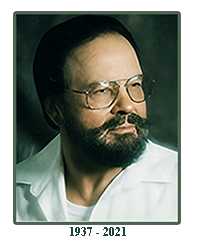
1. Introduction to Dr. Cherepanov's analysis
1.1 Purpose of This Page
This page serves as a scholarly review and archival repository for Dr. Genady P. Cherepanov's scientific analysis of the World Trade Center collapse on September 11, 2001. It presents his fracture mechanics-based critique of the official progressive collapse theory, preserves his original work, and places it within the broader context of his scientific legacy.
1.2 A Note on Context
Dr. Cherepanov was a distinguished mechanician and Honorary Life Member of the New York Academy of Sciences. His analysis of the WTC collapse is an extension of his life's work on fracture mechanics, fracture waves, and the behavior of materials under extreme stress. This page focuses on the scientific arguments he advanced, not on political or conspiracy theories. The purpose is to preserve his intellectual contributions and to facilitate scholarly discussion.
1.3 Disclaimer
The views expressed in Dr. Cherepanov's article are his own and do not necessarily reflect the views of this website's maintainers. This page is provided for educational, critical, and archival purposes. Readers are encouraged to consult the full range of scientific literature on the subject.
2. The central argument: fracture waves VS. progressive collapse
2.1 The Official Theory (Bazant & Zhou, 2002)
A brief summary of the widely accepted explanation for the WTC collapse: creep buckling of bearing columns due to fire-induced weakening, followed by progressive, floor-by-floor failure triggered by the dynamic impact of the falling upper structure.
2.2 Dr. Cherepanov's Critique
An overview of his scientific objections to the official theory, including:
• Thermal Stress vs. Creep: His argument that the fires were not hot enough or sustained long enough to cause the required creep buckling.
• Free Fall & Explosion: The inconsistency between the observed free-fall regime and explosion sound with the progressive collapse model.
• The Collapse of WTC 7: His observation that the collapse of the neighboring 47-story building contradicts the official theory, as there was no upper structure to initiate a progressive failure.
• Pulverization of Debris: The official theory cannot explain the fine dust and small fragments observed, whereas fracture mechanics can.
2.3 The Fracture Wave Hypothesis
A detailed explanation of Cherepanov's alternative theory:
• Definition of a Fracture Wave: A front of discontinuity that separates intact material from destructed material, propagating at the speed of sound.
• Triggering Mechanism: High compressive thermal stresses, combined with residual technological stresses, create a "heating bomb" that releases energy in a fracture wave.
• The Batavian Tear Analogy: A comparison to the classic example of a glass tear that explodes into dust when its tail is broken, illustrating the fracture wave phenomenon.
• Consequences: A fracture wave would disintegrate the building in less than 0.1 seconds, producing the sound of an explosion, free fall of steel fragments, and dust clouds of pulverized glass, concrete, and marble.
3. Critical peer response
3.1 The Bažant Rebuttal
A summary of the critical response from Zdeněk P. Bažant, the author of the official theory:
• "Ill-Posed Dynamic Problem": Bažant argued that Cherepanov's fracture wave concept is an ill-posed dynamic problem that requires a nonlocal formulation.
• Ductility of Steel: Bažant contended that structural steel is too ductile to fragment in the manner described by Cherepanov's fracture wave model.
• Lack of Experimental Evidence: Bažant noted that Cherepanov provided no experimental validation for the fracture wave mechanism in large-scale steel structures.
3.2 A Scientific Dialogue
This section frames the exchange as a legitimate scientific debate between two distinguished researchers. It emphasizes that such debates are the foundation of scientific progress and that Cherepanov's work, while unconventional, deserves to be considered on its scientific merits.
4. The full article
4.1 Publication History
Dr. Cherepanov published his analysis of the WTC collapse in several venues:
Original Russian-Language Publications:
• "О разрушении Всемирного торгового центра в Нью-Йорке 11 сентября 2001 г." ("On the Collapse of the World Trade Center in New York on Sept. 11, 2001")
Published in: Проблемы машиностроения и автоматизации (Problems of Mechanical Engineering and Automation), No. 1, pp. 10-19, 2006 (in Russian)
• "О разрушении Всемирного торгового центра в Нью-Йорке 11 сентября 2001 г."
Published in: Izd-vo Nazionalnoi Akademii Nauk Armenii (Proceedings of the National Academy of Sciences of Armenia), 2006, pp. 279-296 (in Russian)
Peer-Reviewed English-Language Publications:
• Cherepanov, G.P. (2006). "Mechanics of the WTC collapse." International Journal of Fracture, Vol. 141, pp. 287–289.
https://doi.org/10.1007/s10704-006-0081-8
• Cherepanov, G.P., Esparragoza, I.E. (2007). "Progressive Collapse of Towers: The Resistance Effect." International Journal of Fracture, Vol. 143, pp. 203–206.
https://doi.org/10.1007/s10704-007-9060-y
4.2 Summary of Dr. Cherepanov's Scientific Arguments
Based on his published work, Dr. Cherepanov's key scientific conclusions include:
(i) Thermal Stresses, Not Creep, Were the Primary Trigger
Cherepanov argued that the fires were not hot enough or sustained long enough to cause the required creep buckling of steel columns. Instead, he contended that thermal stresses — both compressive and tensile — played the dominant role. He calculated that thermal stresses could reach up to 2 GPa, far exceeding the yield strength of steel, and that these stresses, combined with gravitational and residual technological stresses, created the conditions for a fracture wave.
(ii) Tensile Failure of Cold Columns, Not Buckling of Hot Columns
Using a "hot spot" model, Cherepanov demonstrated that the collapse would more likely have been triggered by tensile failure of cold bearing columns (heated columns expand and compress cold columns) rather than by creep buckling of hot columns. He calculated that the critical size of the hot spot required for tensile failure was smaller than that required for buckling, making tensile failure the more probable trigger.
(iii) Dynamic Impact Was Insufficient to Cause Progressive Collapse
Cherepanov re-examined the dynamic impact calculations of the official theory. Using the exact solution of the elastic wave equation for a falling mass impacting a column, he found that the maximum dynamic stress was approximately 340 MPa — far less than the 64.5 times overload claimed by the official theory. He concluded that the dynamic impact alone could not have caused the progressive collapse of the underlying structure.
(iv) Progressive Collapse Cannot Explain Free Fall, Explosion Sound, or Pulverization
Cherepanov identified three key phenomena that the official theory could not explain:
• Free Fall: The buildings collapsed at the speed of free fall, which is inconsistent with the progressive failure model where the underlying structure should offer resistance.
• Explosion Sound: Witnesses reported sounds of explosions during the collapses, which are not explained by progressive buckling.
• Pulverization: The buildings were reduced to fine dust and small fragments — a mode of failure never before observed in steel structures.
(v) The Fracture Wave Hypothesis
Cherepanov proposed that a self-maintaining fracture wave — a front of discontinuity that separates intact material from destructed material, propagating at the speed of sound — could explain all three phenomena. He argued that high compressive thermal stresses, combined with residual technological stresses, would release energy in a fracture wave that would disintegrate the building in less than 0.1 seconds, producing the sound of an explosion, free fall of steel fragments, and dust clouds of pulverized glass, concrete, and marble.
(vi) The Batavian Tear Analogy
Cherepanov compared the WTC collapse to the classic example of a Batavian tear (Prince Rupert's drop) — a glass tear that explodes into dust when its tail is broken. He argued that the same fracture wave phenomenon that pulverizes the glass tear could also pulverize a large steel structure under sufficiently high compressive stress.
(vii) The Significance of the WTC 7 Collapse Process
Cherepanov noted that the collapse of the neighboring 47-story WTC 7 building — which was not hit by an aircraft — contradicted the official theory, as there was no upper structure to initiate a progressive failure. He argued that the fracture wave hypothesis provided a more consistent explanation.
4.3 Scholarly Context
Dr. Cherepanov's analysis was published in the peer-reviewed International Journal of Fracture, a respected journal in the field of mechanics. His work has been cited and discussed by other researchers, including Zdeněk P. Bažant, who published a rebuttal. This exchange represents a legitimate scientific debate between two distinguished researchers, which is the foundation of scientific progress. Readers are encouraged to consult both sides of the debate and form their own conclusions.
4.4 Scientific Legacy
Regardless of whether Cherepanov's fracture wave hypothesis is ultimately accepted, his work on the WTC collapse represents an important contribution to the scientific discussion of structural failure under extreme conditions. It demonstrates his intellectual independence, his willingness to challenge established authority, and his commitment to applying the principles of fracture mechanics to real-world problems. This page preserves his work for future generations of scientists and engineers.
5. Conclusion: A Scientist True to His Calling
5.1 A Fearless Scientist
Dr. Cherepanov's analysis of the WTC collapse exemplifies his intellectual independence and courage. He was willing to challenge established authority and risk his professional reputation in order to follow the conclusions he reached through scientific inquiry. Cherepanov's fracture wave hypothesis is a bold scientific theory the value of which lies in the revision of generally accepted concepts and its contribution to scientific discourse. Regardless of whether it is ultimately accepted, this work should be remembered as an act of intellectual courage, a testament to Genady Cherepanov's character, and an expression of his unwavering commitment to the pursuit of truth, even when doing so was unpopular.
5.2 Preserving the Legacy
This page is part of a broader effort to preserve Dr. Cherepanov's complete legacy — both his widely accepted contributions to fracture mechanics and his more unconventional work on the WTC collapse. By presenting his arguments clearly, acknowledging the counterarguments, and providing access to the full article, this page honors his commitment to scientific inquiry and free thought.
6. References and further reading
6.1 Primary Sources by Dr. Cherepanov
• Cherepanov, G.P. (1979). Mechanics of Brittle Fracture. McGraw-Hill, New York.
• Cherepanov, G.P. (1997). Methods of Fracture Mechanics: Solid Matter Physics. Kluwer, Dordrecht.
• Cherepanov, G.P. (2006). "О разрушении Всемирного торгового центра в Нью-Йорке 11 сентября 2001 г." Проблемы машиностроения и автоматизации, No. 1, pp. 10-19.
• Cherepanov, G.P. (2006). "О разрушении Всемирного торгового центра в Нью-Йорке 11 сентября 2001 г." Izd-vo Nazionalnoi Akademii Nauk Armenii, pp. 279-296.
• Cherepanov, G.P. (2006). "Mechanics of the WTC collapse." International Journal of Fracture, Vol. 141, pp. 287–289. DOI
• Cherepanov, G.P., Esparragoza, I.E. (2007). "Progressive Collapse of Towers: The Resistance Effect." International Journal of Fracture, Vol. 143, pp. 203–206. DOI
• Cherepanov, G.P. (2019). Invariant Integrals in Physics. Springer.
6.2 Secondary Sources
• Bažant, Z.P. & Zhou, Y. (2002). "Why Did the World Trade Center Collapse? — Simple Analysis." Journal of Engineering Mechanics, Vol. 128, No. 1, pp. 1-6.
• Bažant, Z.P. & Verdure, M. (2007). "Mechanics of Progressive Collapse: Learning from World Trade Center and Building Demolitions." Journal of Engineering Mechanics, Vol. 133, No. 3, pp. 308-319.
• Bažant, Z.P., Le, J.-L., Greening, F.R., & Benson, D.B. (2008). "What Did and Did Not Cause Collapse of World Trade Center Twin Towers in New York?" Journal of Engineering Mechanics, Vol. 134, No. 10, pp. 892-906.
6.3 Related Works on Fracture Waves
• Cherepanov, G.P. (1967). "On Crack Propagation in Continuous Media." Journal of Applied Mathematics and Mechanics (PMM), Vol. 31, No. 3, pp. 476-488.
• Cherepanov, G.P. (2007). "Fracture waves and the WTC collapse." International Journal of Fracture, Vol. 147, pp. 1-4.
7. Appendix: The theory of fracture waves (Summary)
A concise summary
of the key equations and principles of fracture wave theory, extracted from Cherepanov's 1979 monograph Mechanics of Brittle Fracture:
• Conservation Laws on the Fracture Wave: Mass, momentum, and energy conservation equations.
• Key Results: The fracture wave propagates at the speed of sound; material behind the wave is dilated; the size of fragments is determined by the effective surface energy and compressive stress.
• Applications: Predictions for the size of steel debris and dust particles from the WTC collapse.
|